Article
Portugal Homes
Get the best property advice.
Does Portugal celebrate Halloween?
Yes, Halloween in Portugal is celebrated on the 31st October.
It's not your typical Halloween experience, but it does offer a nice mix of our modern take on Halloween with typical Portuguese customs.
It's better known as Dia das Bruxas (Witches' Day, translated literally) in Portugal, and after enjoying the parties and dressing-up on 31st October, you can then experience All Saints’ Day on 1 November and understand the importance of the season on a local level.
What does Halloween look like in Portugal?
In Portugal, Halloween is a more of a recent phenomenon, and even though it's celebrated, it's not widespread.
While you'll find definitely see plenty of evidence of it throughout major cities like Lisbon and Porto, the countryside doesn't nearly celebrate it as much.
To celebrate the spooky season, some schools might incentivize students to do arts and crafts with pumpkins and other Halloween-related ornaments, as well as allow dressing-up for the day. Shops sell dedicated merchandising and sweets while bars and clubs hold themed nights.
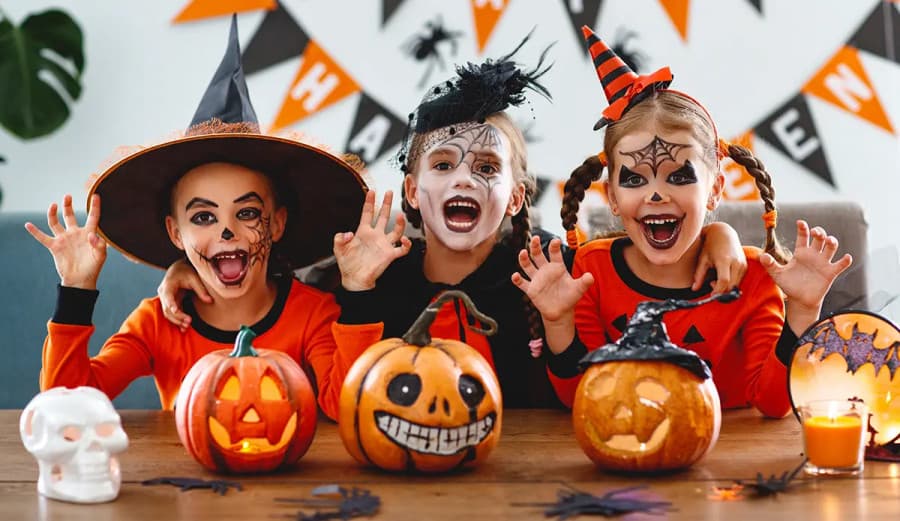
You'll see some classic horror-inspired costumes like vampires, witches, Frankenstein's monster, zombies, and other creatures.
However, that's not all. Halloween is seen as the year's second opportunity to dress-up, after the Portuguese Carnaval, with many people taking the opportunity to dress up as characters from TV and movies.
You'll also see some decorations and trick-or-treating (called doçura ou travessura) in expat areas and newer neighbourhoods.
Apartment buildings with families and international communities tend to be more receptive, but don't expect everyone to have sweets. However, the celebration is much lighter than natives of English-speaking countries may be used to, so don't expect to see lots of decorated houses. As for general decoration, plenty of shops will have pumpkins and Halloween-themed shopfronts in the weeks leading up to 31 October.
Halloween sits alongside long-standing religious observances on the 1st of November (All Saints’ Day) and the 2nd of November (All Souls’ Day).
All Saints’ Day in Portugal (November 1st)
Instead of Halloween, the more interior regions of the country tend celebrate All Saints’ Days, which is a public holiday in Portugal. The day is traditionally a celebration of the saints of the Catholic Church. Families may attend Mass, visit cemeteries (sometimes even cleaning them), and spend the day together.
A traditional custom called Pão por Deus (Bread for God) takes place in the morning in many towns and villages. Children go door-to-door saying “Pão por Deus” and receive small treats such as broas (spiced biscuits), fruit, nuts, or sweets.
Think of it as a local, daytime cousin to trick-or-treating, with roots that predate modern Halloween.
All Souls’ Day in Portugal (November 2nd)
All Souls’ Day is a traditional celebration of all those who have passed away. While not a public holiday, All Souls’ Day is observed quietly. Many people light candles and say prayers for loved ones. Bakeries continue to sell Broas dos Santos and other seasonal sweets.
If you're travelling, expect a calmer tone than Halloween night, with most activity centred on churches and families.
Is it the same as the Day of the Dead in Portugal?
All Souls' Day, or Dia dos Fiéis Defuntos in Portugal, is quite different from what you might t be used to when you think of the Day of the Dead.
Unlike the famous Mexican festivities, celebration of All Saints’ and All Souls’ Days in Portugal focus on quiet remembrance, respect, contemplation, and time spent with family. You may sees some expats refer to “Day of the Dead in Portugal", but All Souls' Day is definitely more of a religious observance than anything else and is not usually celebrated publicly.
Instead, it's a more intimate experience, with dedicated church services.
FAQs about Halloween in Portugal
Is Halloween a big deal in Portugal?
Halloween celebrations are growing, but it's still not a widespread holiday. It's more commonly celebrated in cities, especially by children and young people who want to enjoy the trick-or-treating that they’ve seen on television and in films.
Do children trick-or-treat?
Sometimes. You'll find some children trick-or-treat in family-heavy areas, especially in more urban settings.
In the countryside, it's more common for trick-or-treating to occur on the November 1st morning, where children go out with their parents to ask for Pão por Deus in towns that keep up the custom.
Is 1 November a holiday?
Yes, All Saints’ Day is a public holiday. If you've got errands to take care of, it’s best to plan them for another day.
What sweets are traditional?
Broas dos Santos (spiced biscuits), nuts, and fruit are typical for Pão por Deus. Supermarkets stock Halloween sweets throughout October.
Is there a Day of the Dead parade?
No. Portugal's version of the “day of the dead” is a quiet, religiously-focused event.
Where are the best Halloween events?
Lisbon, Porto, and the Algarve have the biggest dedicated events, including parties and family activities.
What should visitors expect on 1st–2nd November?
Calmer streets, church activity, and family time. Some museums and attractions remain open with holiday hours.
Portugal Homes
Get the best property advice.