Article

Portugal Homes
Get the best property advice.
With its Blue Flag beaches, vibrant cities, and protected nature parks, choosing just one place to visit in Portugal can be a challenge. Fortunately, the country has an excellent and reasonably priced transportation network, along with plenty of two and four-wheel rental options, that make getting around this Iberian gem a breeze.
Here is your guide on how to get around Portugal:
Train
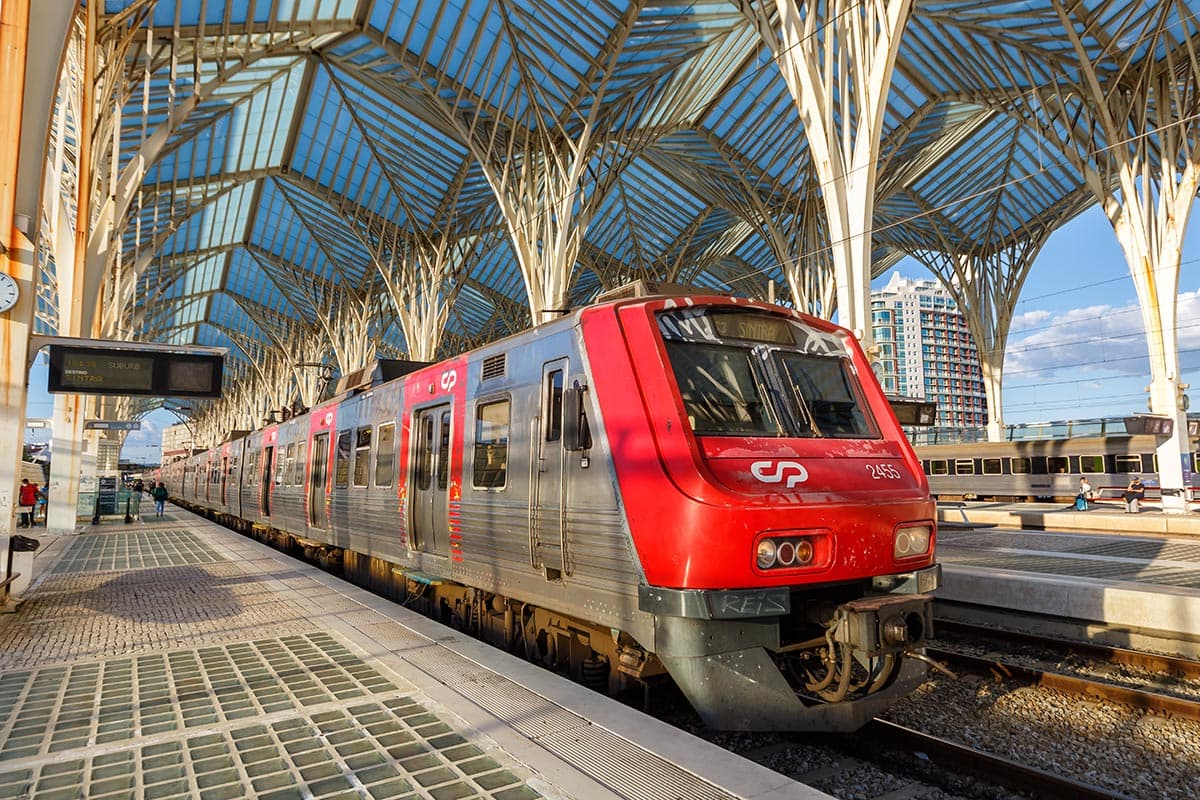
Portugal has an extensive railway network that spans most of the country, making intercity travel both affordable and highly convenient. Many routes are also notably scenic, offering views of coastlines, countryside, and greenery along the way.
Trains connect major cities such as Lisbon, Faro, Lagos, and Porto, while international services link Portugal to destinations including Madrid and Paris.
High-Speed Rail: Porto to Lisbon
In January 2024, the Portuguese government announced plans for a new high-speed rail line between Porto (Campanhã Station) and Lisbon (Oriente Station), covering approximately 290 kilometres. Once completed, the line will reduce travel time between the two cities to just 1 hour and 15 minutes, while significantly increasing rail capacity along one of the country’s busiest corridors.
The project will be delivered in multiple phases:
Phase 1: Porto to Soure, expected to be completed by 2028
Phase 2: Soure to Carregado, scheduled for completion by the end of 2030
Phase 3: Carregado to Lisbon-Oriente Station
Designed to integrate seamlessly with existing rail infrastructure, the new line will support both future high-speed trains and current long-distance services, improving nationwide connectivity and reducing overall travel times.
This initiative reflects Portugal’s strong commitment to modernising its rail network and building a more connected, efficient transport system.
Train Services in Portugal
Rail services in Portugal are operated by CP – Comboios de Portugal, the country’s main railway provider. CP runs four main categories of long-distance services (excluding international routes):
Regional (R): Stop at most stations nationwide
InterRegional (IR): Faster services that skip smaller stations
Intercidades (IC): Express trains serving mainly major cities
Alfa Pendular Deluxe: The fastest option, with limited stops and higher fares
TGV: High-speed service between Porto and Lisbon, expected to launch from 2030
Both Lisbon and Porto operate extensive suburban rail networks, providing efficient connections between major cities and surrounding regions. In Greater Lisbon, suburban trains serve destinations such as Sintra, Cascais, Setúbal, and the lower Tagus Valley. In the north, Greater Porto’s network extends to Braga, Guimarães, and Aveiro. Suburban rail services also operate between Coimbra and Figueira da Foz.
Tickets and Booking
Long-distance train tickets can be purchased online via the official Comboios de Portugal website or at railway stations nationwide.
Tickets for Intercidades and Alfa Pendular services are typically available up to 30 days in advance, although same-day purchases are often possible. Other services generally require booking at least 24 hours in advance to ensure availability.
Green Rail Pass
Introduced in October 2024, the Green Rail Pass allows Portuguese residents unlimited travel on Regional, InterRegional, and Intercidades train services for 30 consecutive days at a cost of €20.
Extended options are also available:
60-day pass: €40
90-day pass: €60
The pass must be loaded onto a CP card, which costs €6. Selected suburban services, including routes around Coimbra and areas outside the Lisbon and Porto metropolitan regions, are also covered.
Seat reservations must be made at least 24 hours in advance, and first-class travel is not included in the pass.
Discounts and Free Travel
Children under 5 travel free of charge
Children aged 6 to 12 receive a 50% discount
Seniors aged 65 and over are eligible for a 50% discount on all services, upon presentation of valid identification.
Bus
(7).jpg&w=3840&q=75)
For travellers on a tighter budget, buses are one of the most affordable and practical ways to get around Portugal. Bus services are particularly useful for reaching smaller towns and villages that are not served by the rail network.
Several national and regional operators provide extensive coverage across the country:
Rede Expressos: Connects the Algarve with Lisbon, Porto, Barcelos, Braga, and Arcos de Valdevez;
Rodonorte: Serves northern Portugal, operating mainly from Vila Real;
Eva Transportes: Regional Algarve network, connecting local towns and offering routes to Seville (Spain);
Frota Azul: Operates around the beach resorts of Portimão;
Gypsyy: Connects Porto, Sintra, Cascais, Lisbon, Albufeira, and Faro;
FlixBus: Provides low-cost bus travel throughout Portugal and across Europe;
Transdev: Operates routes from northern Portugal to the northwest of the Tagus Valley.
Types of Bus Services
Bus routes in Portugal generally fall into three main categories:
Carreiras: Daily local routes with multiple stops
Expressos and Rápidas: Faster, more comfortable services; Expressos run between major cities, while Rápidas operate within specific regions
Alta Qualidade: Premium, high-speed services offered by selected operators
Car and Motorbike

Exploring Portugal on wheels is a wonderful way to experience the country, since it offers the freedom to travel at your own pace, without relying on public transport schedules. The country’s road and motorway network continues to expand, making self-driven travel increasingly convenient across both urban and rural areas.
Nationals from the European Union, the United Kingdom, the United States, and Brazil may drive in Portugal using their home driving licence. Drivers from other countries are required to obtain an International Driving Permit (IDP) from their local driving authority before operating a vehicle in Portugal.
Car Rentals and Transfers
Renting a car in Portugal is straightforward, with rental with rental companies located in major towns, cities, and airports such as Lisbon, Porto, and Faro. Due to higher competition, rental prices in the Algarve are often lower, and booking in advance typically helps secure better rates.
Portugal is home to a wide range of car rental providers, including Amoita, Holiday Autos, Guerin, Sixt, Hertz, and Europcar.
You may also rent motorcycles and scooters in larger cities, and all over the coast of the Algarve.
Bicycle
(11).jpg&w=3840&q=75)
Although there are relatively few designated bike lanes, cycling is quite popular around Portugal. A wide variety of routes are available, ranging from coastal paths to mountain trails and rural landscapes, offering memorable views and diverse riding experiences.
Cycling routes can be found throughout the country, including in the northern natural parks, such as Parque Nacional da Peneda-Gerês, along the coastline, and across the Alentejo region. For those seeking a more challenging ride, Serra da Estrela—home to the Tour de Portugal’s iconic “mountain stage”—offers demanding climbs and rewarding scenery. Another popular option is Serra do Marão, located between Amarante and Vila Real.
Overall, Portugal is a safe country for independent exploration by bicycle. With the right route planning to avoid heavy traffic, cyclists can enjoy scenic trails, open landscapes, and varied terrain, making Portugal an appealing destination for both leisure and adventure cycling.
Airplane
(8).jpg&w=3840&q=75)
Mainland Portugal is served by three major international airports: Porto Airport in the north, Lisbon Airport in the capital, and Faro Airport in the Algarve. Together, they provide strong national and international connectivity.
Portugal’s island regions are also well equipped. The Madeira and Azores archipelagos both have modern airport infrastructure, with Funchal Airport (Madeira) being the most prominent. Funchal Airport connects the island to 65 international destinations and has the capacity to handle approximately 3.5 million passengers per year.
International and Domestic Flights
For international travel, Lisbon Airport is Portugal’s primary hub and main entry point, although flights into Porto are sometimes available at a lower cost, depending on the route and season.
TAP Air Portugal, the national airline, offers a wide range of domestic and international routes, often at competitive prices. One of its key benefits is the Stopover Programme, which allows travellers flying between Europe and the United States, Canada, or Brazil to include a free stopover in Portugal for up to 10 days.
Other popular low-cost carriers operating routes to and within Portugal include Ryanair and easyJet.
Private Jet and Charter Flights
For private aviation, Portugal offers a wide network of dedicated airfields, allowing travellers to save time and arrive closer to their final destination.
Near Lisbon, the most well-known options include Lisbon Tires–Cascais Airport and Sintra Airport, both conveniently located near Lisbon, Cascais, and Sintra.
In northern Portugal, close to Porto, private charter services are available at:
Maia Vilar da Luz, Espinho, Viseu, Bragança, Ovar, and Monte Real airfields.
In the southern regions, private aviation facilities are available at Montijo and Sines, offering easy access to Lisbon’s South Bay. For destinations in Alentejo and the Algarve, private charters can operate to Évora, Beja Airport, Alvor, or Faro Airport.
Metro/Subway
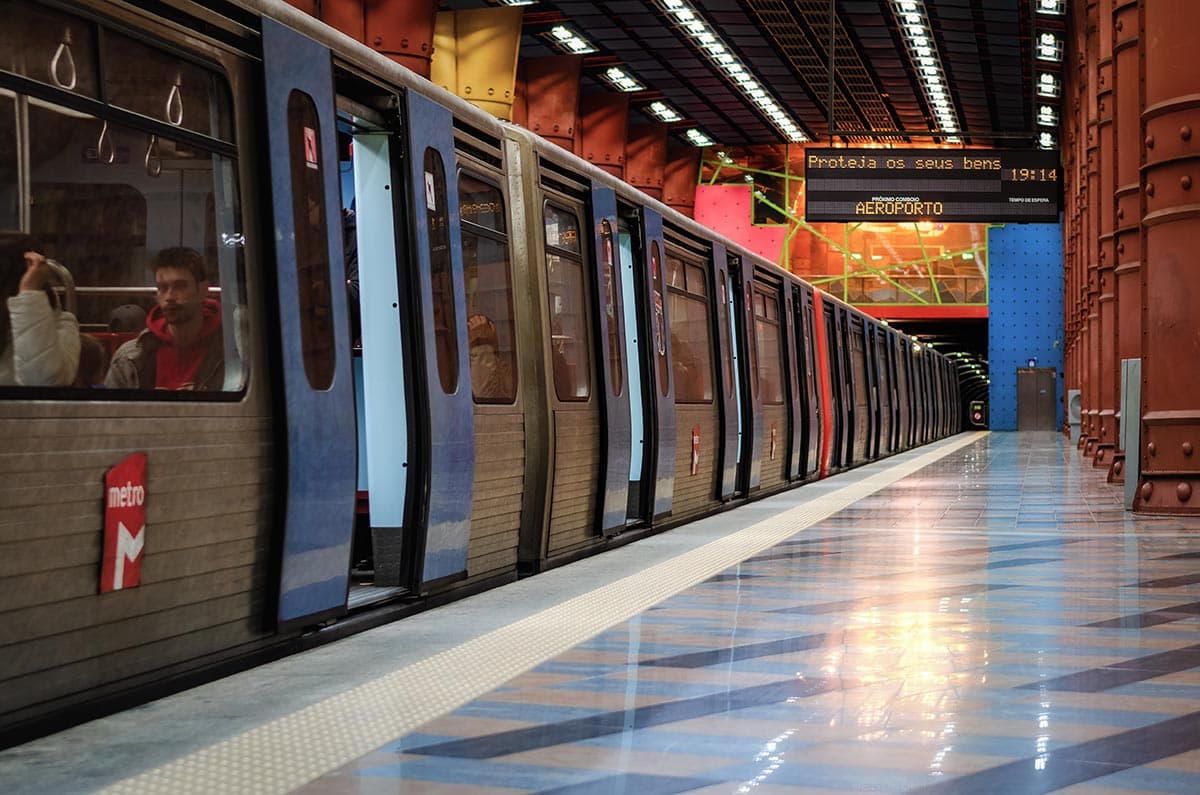
Using the metro and suburban rail systems is one of the most efficient ways to get around Portugal’s larger cities, particularly Lisbon and Porto. Lisbon is also supported by overground rail services serving the South Bay.
Metro fares are affordable, and 24-hour and tourist passes are widely available:
Porto: €5.15 to €16.70
Lisbon: €6.80 to €10.80
Tickets can be purchased at vending machines or from metro operators. Day passes offer greater flexibility and are ideal for sightseeing-heavy days.
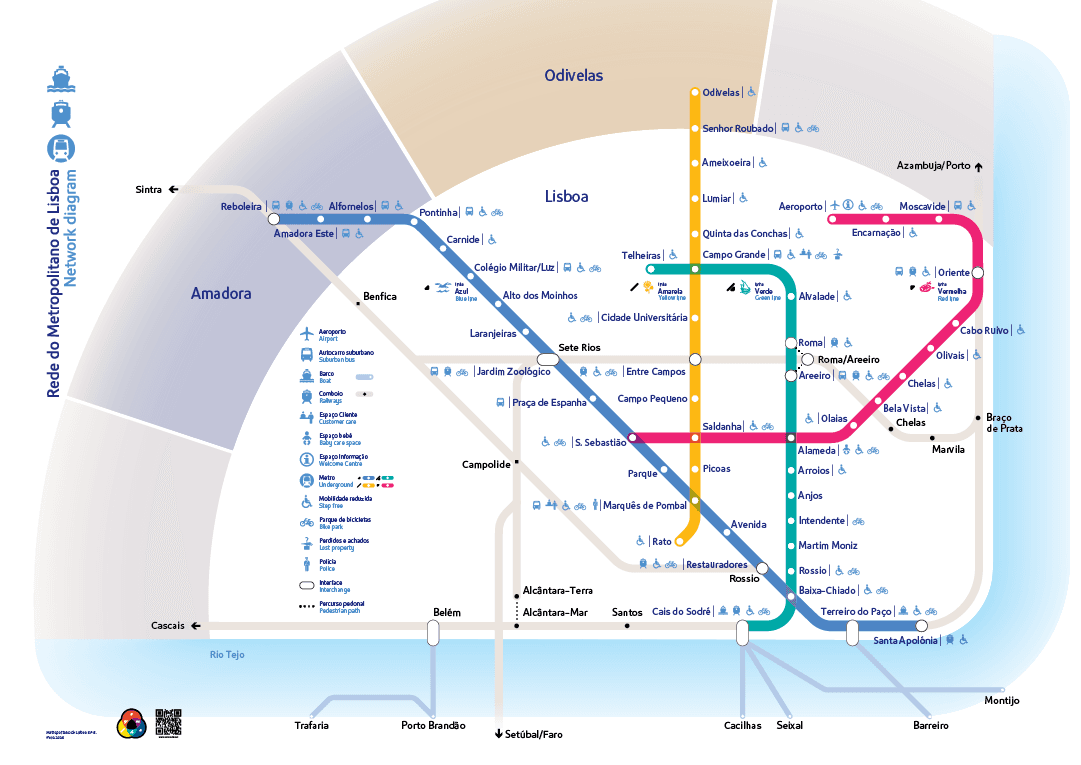
Lisbon Metro Lines
The Lisbon Metro consists of four main lines, each identified by a colour and symbol, making the system easy to navigate for both residents and visitors.
Blue Line (Linha Azul – Seagull icon)
Runs from Santa Apolónia to Reboleira.
Key connections include Santa Apolónia and Sete Rios railway stations (via Jardim Zoológico). The line serves major areas such as Praça do Comércio (Terreiro do Paço), Marquês de Pombal, Jardim Zoológico, and Colégio Militar, extending into Amadora.
Yellow Line (Linha Amarela – Sunflower icon)
Runs from Rato to Odivelas.
Connects with Entrecampos railway station and serves important areas including Marquês de Pombal, Saldanha, Campo Pequeno, Campo Grande, Lumiar, and Odivelas.
Green Line (Linha Verde – Caravel icon)
Runs from Cais do Sodré to Telheiras.
Provides access to Cais do Sodré railway station, the Cascais train line, buses, trams, and ferry services to the Lisbon South Bay. It passes through central neighbourhoods such as Baixa-Chiado, Rossio, Intendente, Anjos, Arroios, Alameda, Areeiro, and Roma, with rail connections to Sintra and Azambuja lines at Roma-Areeiro.
Note: Despite the name, Rossio railway station connects to Restauradores metro station, not Rossio metro station (both are within a short walking distance).
Red Line (Linha Vermelha – Compass icon)
Runs from São Sebastião to Lisbon Airport.
Provides an important interchange at São Sebastião, where the Blue and Red lines connect, and offers a direct route to the airport.
Source: Metropolitano de Lisboa
Porto Metro Lines
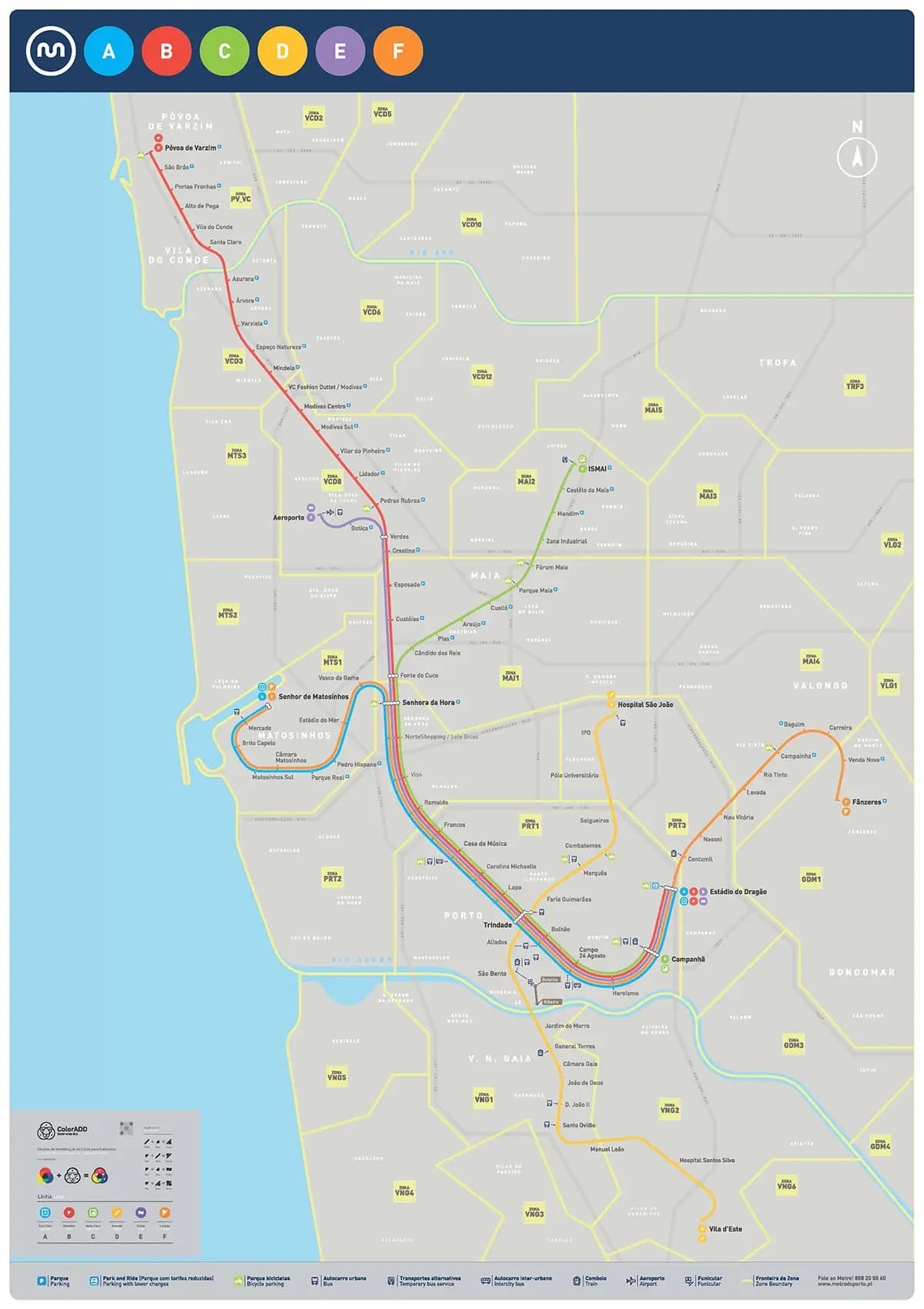
Porto’s metropolitan transport system operates six rapid-transit metro lines serving both central Porto and its surrounding suburbs. Much like Lisbon, the network extends across seven municipalities:
Porto
Gondomar
Maia
Matosinhos
Póvoa de Varzim
Vila do Conde
Vila Nova de Gaia.
Line A (Blue)
Connects Estádio do Dragão to Senhor de Matosinhos. This line provides easy access to FC Porto’s stadium, making it particularly convenient on match days for avoiding road traffic.
Line B (Red)
Runs from Estádio do Dragão to Póvoa de Varzim, linking central Porto stations such as Heroísmo, Campanhã, and Trindade with this coastal city located around 30 km north of Porto.
Line C (Green)
Connects Campanhã to ISMAI (University of Maia). This is a busy commuter route, particularly popular with students travelling between Porto and Maia.
Line D (Yellow)
Runs from Hospital de São João to Santo Ovídio in Vila Nova de Gaia. The line serves Porto’s main hospital and provides access to Gaia, renowned for its historic port wine cellars along the Douro River.
Line E (Purple)
Connects Trindade in Porto’s city centre directly to Porto Airport. This is one of the most convenient routes for visitors, offering a straightforward connection between hotels, local commerce, and the airport.
Line F (Orange)
Runs from Fânzeres in Gondomar to Senhora da Hora in Matosinhos. The line provides access to NorteShopping, one of the largest shopping centres in Portugal.
Source: Metro do Porto
Tram
(10).jpg&w=3840&q=75)
Riding one of Portugal’s historic trams is considered a must-do experience, especially in Lisbon and Porto. These iconic, vintage vehicles wind through narrow streets and historic neighbourhoods, offering an affordable and atmospheric way to explore the cities. During peak summer months, trams can become crowded, so early morning rides are recommended to secure a seat.
Trams in Lisbon
Tram 28 is Lisbon’s most famous tram and a true symbol of the city. It’s widely considered the best tram route for first-time visitors, as it cuts through some of Lisbon’s most historic and atmospheric neighbourhoods.
Running from Martim Moniz to Campo de Ourique, Tram 28 passes through:
Graça | Alfama |
Baixa | Lapa–Estrela |
Along the way, passengers experience Lisbon’s hills, tiled façades, viewpoints, and major landmarks, making Tram 28 an affordable moving sightseeing tour.
Tram 12: Short, circular route from Praça da Figueira to São Jorge Castle
Tram 18: Runs from Cais do Sodré toward Ajuda, passing above Belém and near the Ajuda National Palace
Tram 24: Connects Largo do Camões to Campolide, passing Príncipe Real, Rato, and Amoreiras
Tram 25: Runs between Praça da Figueira and Campo de Ourique, passing Santos and Lapa–Estrela, near the Basílica da Estrela
Trams in Porto
Porto’s most famous tram route is Line 1, a scenic journey along the north bank of the Douro River. This is the city’s most popular tram line for visitors and one of the most picturesque ways to experience Porto.
The route runs from Infante, through Alfândega and Massarelos, to Passeio Alegre in Foz do Douro, offering beautiful river views and a relaxed ride through historic areas.
Tickets are purchased onboard and cost €6 (price in December 2025).
Other Porto Tram Routes
Line 18: Connects Massarelos (home to the Tram Museum) with central Porto near the University of Porto
Line 22: Circular route linking Carmo and Batalha Square, with easy connections to the Porto Metro and historic city centre landmarks
Funiculars or Elevators
(15).jpg&w=3840&q=75)
Lisbon is famously built on seven hills, and its historic funiculars and elevators (often called cable cars or lifts) are considered national treasures. They provide a practical way to navigate the city’s steep streets while offering some of the best views in town.
Tickets and Fares
A single ride on a funicular costs €3.80 (price in December 2025) and can be purchased directly at the lift.
Alternatively, 24-hour public transport passes, available at metro stations via vending machines or ticket offices, allow unlimited use of metro, trams, buses, and funiculars throughout the day.
Lisbon’s Historic Funiculars
The Gloria Funicular runs from Praça dos Restauradores, just off Avenida da Liberdade, up to Bairro Alto and Príncipe Real. At the top, visitors are rewarded with panoramic views from the São Pedro de Alcântara viewpoint and gardens, making this the most popular and scenic of Lisbon’s lifts.
Lavra Funicular: Connects Largo da Anunciada to Rua Câmara Pestana, near Jardim do Torel and Campo Mártires da Pátria, offering peaceful green spaces and city views.
Bica Funicular: Runs between Rua de São Paulo and Calçada do Combro, leading to Bairro Alto, Bica, and the Miradouro de Santa Catarina viewpoint.
Santa Justa Elevator: Lisbon is also home to the iconic Elevador de Santa Justa, which connects Rua do Ouro to Largo do Carmo. While no longer used primarily as transport, it remains one of the city’s most recognisable landmarks. A ride costs €6.00 (price in December 2025) and is best enjoyed as a tourist attraction rather than a daily commuting option.
Getting around Portugal is easy, affordable, and reliable, with a wide range of transport options for those who prefer not to rent a car. From metros and trams to buses, trains, and funiculars, the country’s public transportation system makes exploring cities and regions both convenient and enjoyable!
Read More:
Most Beautiful Places in Portugal
Regions of Portugal: There Is More to Visit Than You Think

Portugal Homes
Get the best property advice.