Portugal Homes
Get the best property advice.
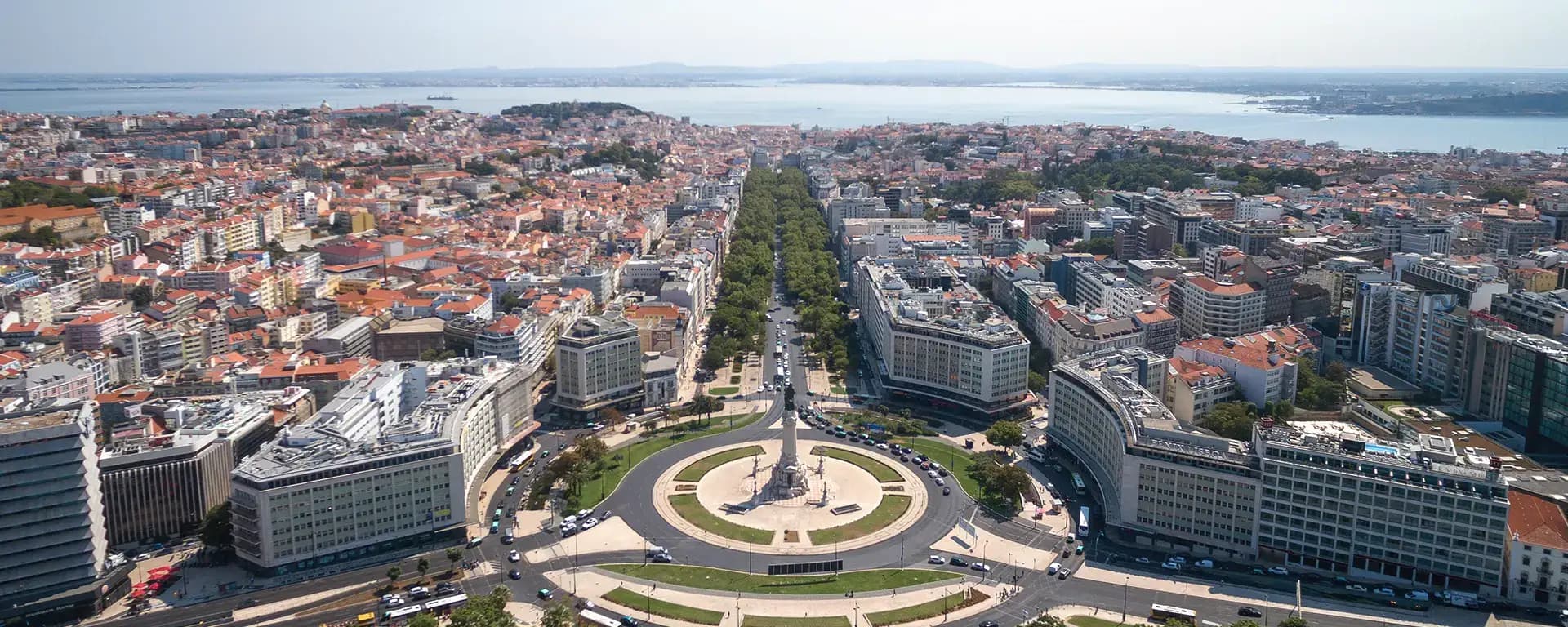
Avenida da Liberdade is Lisbon’s most prestigious boulevard, built in the 19th century and widely regarded as the city’s main avenue. It is home to some of the most exclusive apartments and high-end properties in Portugal, making it one of the most desirable locations for real estate investment.
Exploring Avenida da Liberdade: Discover One of Lisbon’s Key Areas
The most iconic feature of Avenida da Liberdade is the avenue itself. Inspired by the Champs-Élysées in Paris, this grand boulevard was constructed in the 19th century and stretches for approximately 1.6 kilometres, connecting Praça dos Restauradores to Praça do Marquês de Pombal. At over 90 metres wide, it is one of Lisbon’s most impressive urban spaces.
The avenue is defined by its elegance, featuring ornamental fountains, cafés shaded by leafy trees, and distinctive Portuguese cobblestone pavements decorated with intricate patterns. Several original mansions have been preserved along the boulevard, many of which stand out for their architectural significance.
A monument honouring the Heroes of the Great War is also located here, paying tribute to the 50,000 Portuguese soldiers who fought in World War I. Avenida da Liberdade is further distinguished by its luxury hotels and flagship designer stores, including brands such as Louis Vuitton, Prada, Dolce & Gabbana, Versace, Tod’s, Burberry, Hugo Boss, and Miu Miu, among others.
Things to Do in Avenida da Liberdade: Monuments and Places to Visit
Cinema São Jorge
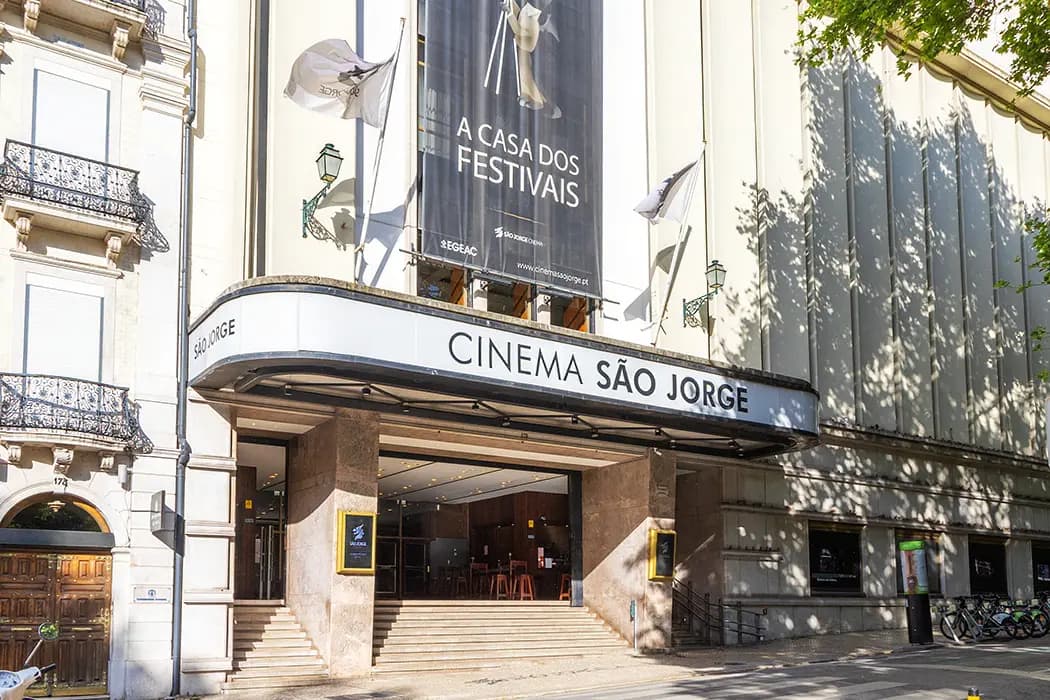
Cinema São Jorge is one of Lisbon’s most emblematic cultural landmarks. A cinema that embraces the present while honouring the past, it was built in the late 1940s by the Anglo-Portuguese Cinema Society and designed by architect Fernando Silva. The venue opened in 1950 and received unanimous recognition with the Municipal Architecture Prize that same year.
Throughout the year, Cinema São Jorge hosts a wide range of film festivals, including French, Italian, Portuguese, and international cinema events. Located on Avenida da Liberdade, it is known for its eclectic audiences, contemporary film selections, and vibrant cosmopolitan atmosphere.
Eduardo VII Park
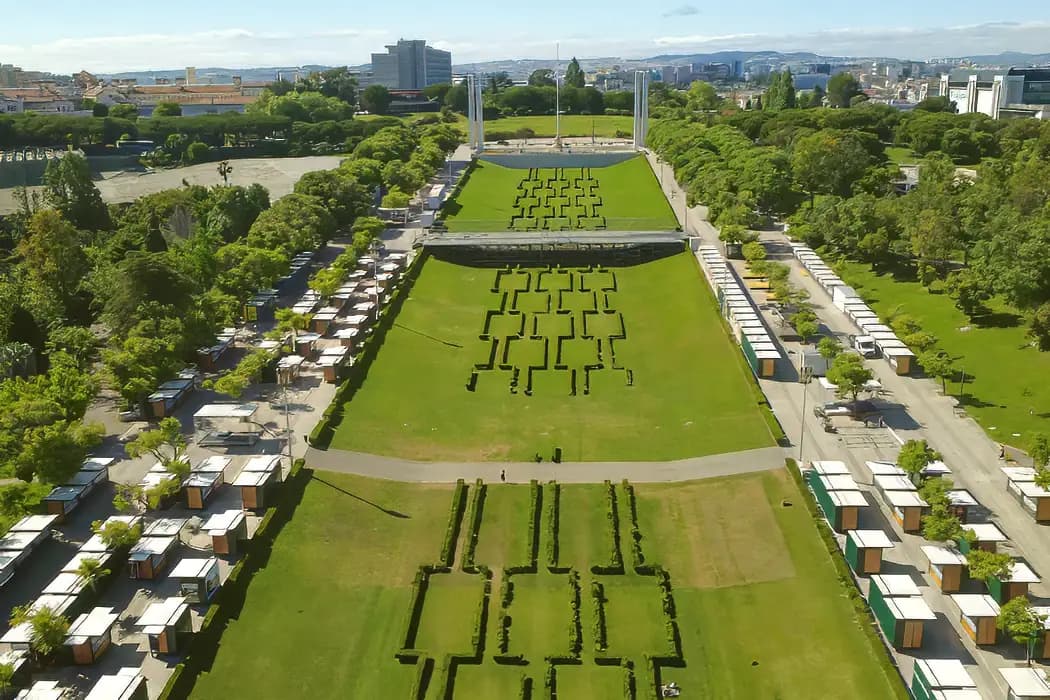
Eduardo VII Park is one of Lisbon’s largest public green spaces, covering 26 hectares to the north of Avenida da Liberdade and Praça do Marquês de Pombal, in the heart of the city.
The park is named after King Edward VII of the United Kingdom, who visited Portugal in 1902 to strengthen diplomatic relations between the two countries. Prior to this visit, it was known as Liberty Park.
Within the park are notable attractions such as the Carlos Lopes Pavilion and the Estufa Fria, a 1.5-hectare greenhouse garden. At the park’s northern end stands a flagpole that regularly flies what is considered the largest Portuguese flag in the world.
Eduardo VII Park also hosts major annual events, including the Lisbon Book Fair in June, the Lisb-On electronic music festival in early September, and a festive Winter Wonderland during December.
Ascensor do Lavra
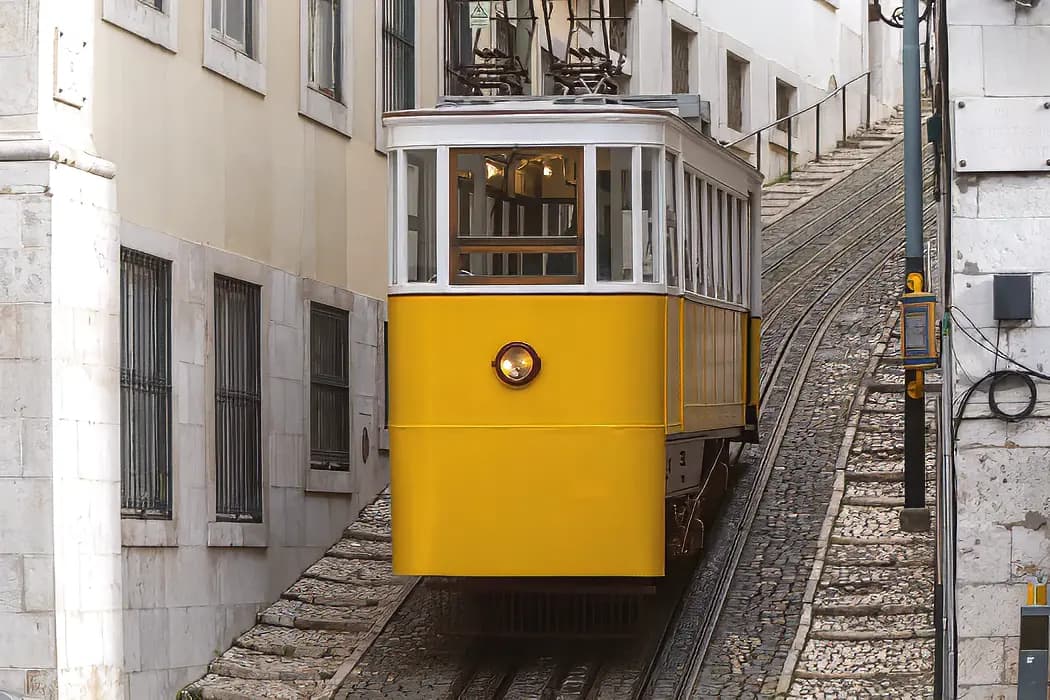
Ascensor do Lavra is the oldest funicular in Lisbon still in operation and remains largely undiscovered by tourists, making it a hidden gem worth experiencing. Located at the end of Rua das Portas de Santo Antão, it is less crowded than the nearby Glória Funicular and sits on the opposite side of Praça dos Restauradores.
With a length of just 188 metres, Lavra is the shortest funicular route in Lisbon and one of the steepest, with an average gradient of 22.9%. Originally powered by gravity using water and counterweights, the system was converted to steam power in 1915.
The ride climbs Calçada do Lavra and leads to the tranquil Jardim do Torel, a small park offering excellent views over Avenida da Liberdade, Baixa, and Príncipe Real. Opened in 1884, Ascensor do Lavra was the city’s first funicular and played a key role in making Lisbon’s hills more accessible.
Teatro Tivoli BBVA
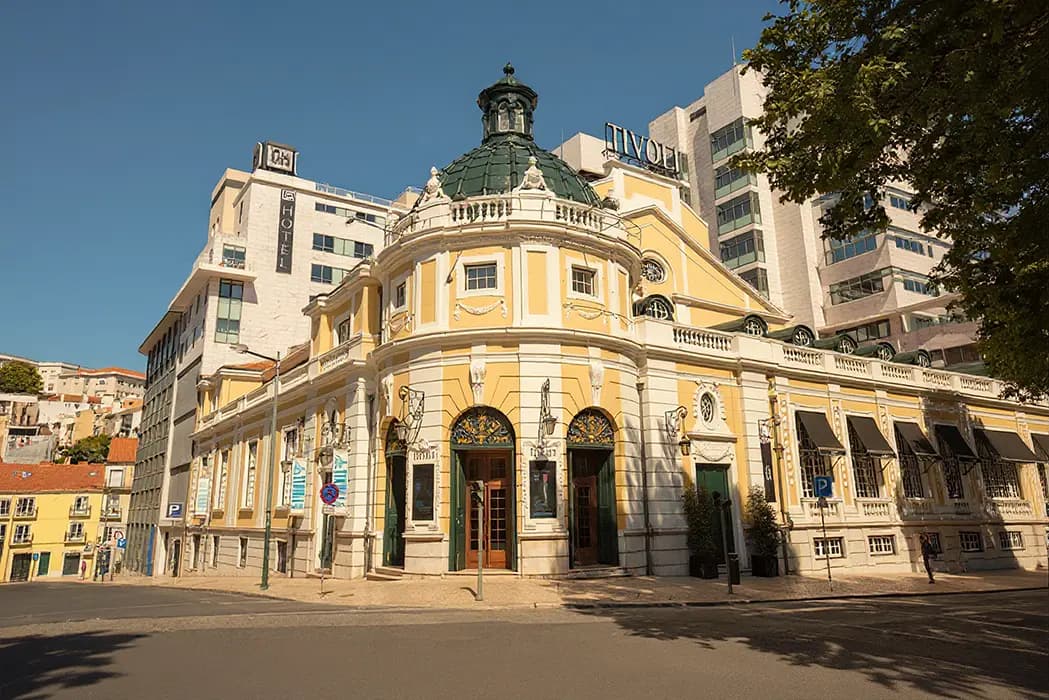
Teatro Tivoli BBVA opened in 1924 as a cinema during the era of silent films and soon expanded to include theatre and ballet. Today, it hosts a wide range of cultural events, including concerts, opera, ballet, jazz performances, film screenings, stand-up comedy, and orchestral music, with a strong focus on theatre.
Designed by architect Raul Lino, the theatre quickly established itself as a modern cultural venue with distinctive neoclassical architecture. Its bold forms and iconic black-tiled dome evoke the character of French theatres, reinforcing Avenida da Liberdade’s Parisian inspiration.
The building also houses a restaurant and a luxury boutique with a separate entrance. Constantly renovated, Teatro Tivoli remains a cultural symbol of both the avenue and the city.
Praça do Marquês de Pombal
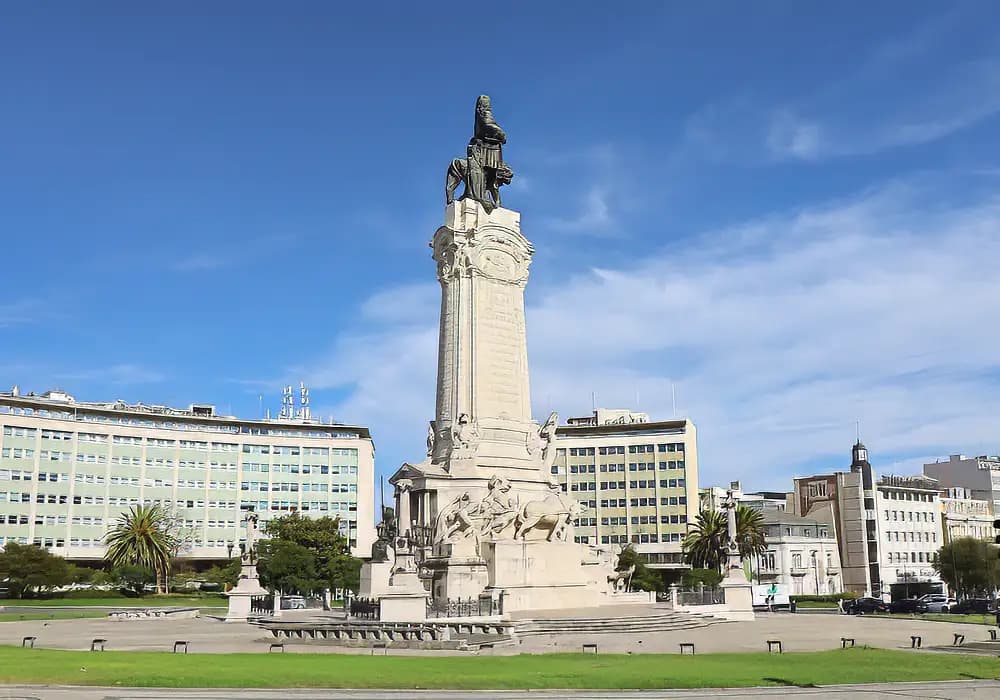
At the centre of Praça do Marquês de Pombal stands a monument dedicated to the Marquis of Pombal, who served as governor of Lisbon between 1750 and 1777. The statue depicts him beside a lion, symbolising power and leadership.
Following the devastating earthquake of 1755, the Marquis of Pombal led the ambitious reconstruction of Lisbon during the reign of King José I, shaping much of the modern city.
Since the early 20th century, the square has been the setting for numerous political and public events, including those that led to the proclamation of the Portuguese Republic on October 5, 1910. Today, it is surrounded by corporate headquarters, major Portuguese banks, and several of the world’s most prestigious five-star hotels.
Praça dos Restauradores
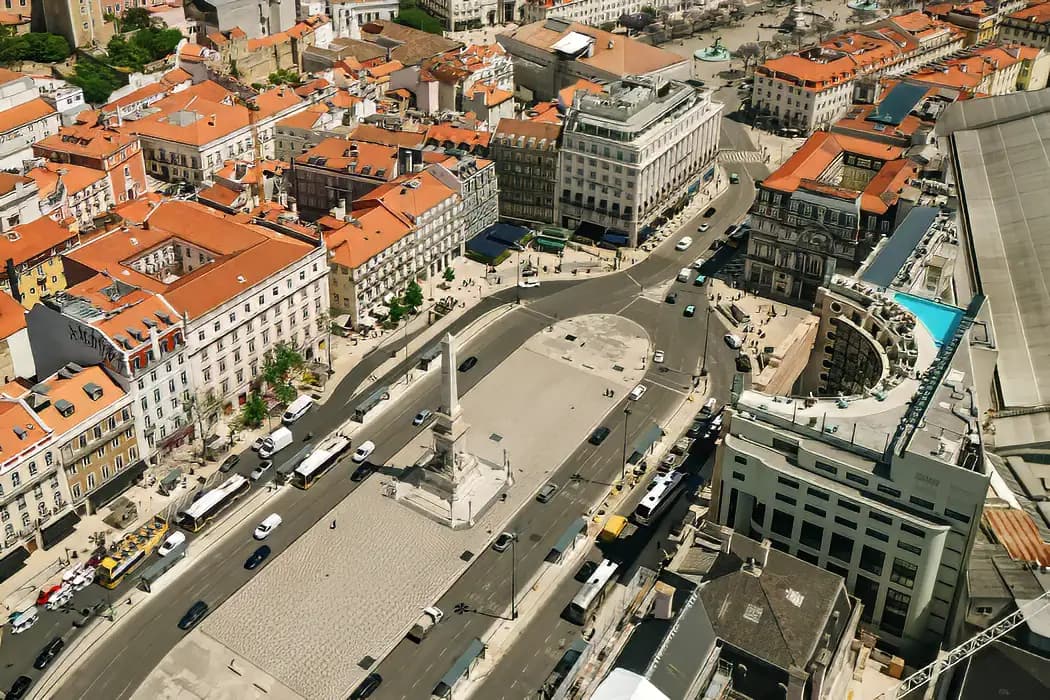
Praça dos Restauradores is located in Lisbon’s central Baixa district and is surrounded by some of the city’s most iconic buildings. Notable landmarks include the Italianate pink façade of Palácio Foz, as well as the Teatro Éden and Condes Cinema, both fine examples of Art Deco architecture.
At the centre of the square stands a 30-metre-high white obelisk commemorating Portugal’s restoration of independence in the 17th century after 60 years of Habsburg rule. The Baroque façade of Palácio Foz is one of the square’s most striking features.
Adjacent to Palácio Foz is the Elevador da Glória, the most famous of Lisbon’s three funiculars. Its iconic yellow carriages have been transporting passengers between Praça dos Restauradores and Bairro Alto since 1885.
Local Information
Transportation
As one of Lisbon’s main thoroughfares, Avenida da Liberdade offers excellent transport connections across the city. Several metro stations serve the avenue, including Marquês de Pombal at the northern end, Restauradores at the southern end, and Avenida station in between. These stations provide access to the Blue and Yellow metro lines, which connect the city centre with northern and western Lisbon.
Lisbon’s public transport system is both reliable and affordable, with single metro tickets costing €1.72. For longer journeys, Lisbon Airport operates numerous daily flights to destinations across the European Union and beyond.
Shopping
Avenida da Liberdade is one of Lisbon’s most fashionable shopping areas. Along its elegant, cobblestone-lined streets, you’ll find a mix of internationally recognised brands and local designer boutiques. Popular high-street and luxury names include Zara, Mango, Prada, Miu Miu, and Hugo Boss, among many others.
For those who enjoy exploring markets, Time Out Market Lisboa, located nearby in Cais do Sodré, offers a vibrant selection of Portuguese gastronomy, fresh produce, and handmade products.
Airports
Located just 7 kilometres from Lisbon’s city centre, Lisbon Portela Airport is Portugal’s main international airport and one of the largest in southern Europe. Thanks to its proximity, travelling between the airport and central Lisbon is quick and convenient, taking approximately 15 minutes by metro, taxi, or bus.
Portugal Homes
Get the best property advice.