Portugal Homes
Get the best property advice.
Baixa is Lisbon’s most central and iconic neighbourhood, home to many of the city’s major landmarks and attractions. Its prime location, historic significance, and constant activity create strong demand for property in this area.
Exploring Baixa
Baixa is the historic heart of Lisbon and one of its most recognisable districts. After being almost entirely destroyed by the catastrophic earthquake and tsunami of 1 November 1755—one of the most powerful earthquakes ever recorded—the area was rebuilt under the direction of the Marquis of Pombal, resulting in the orderly, neoclassical layout that defines the district today.
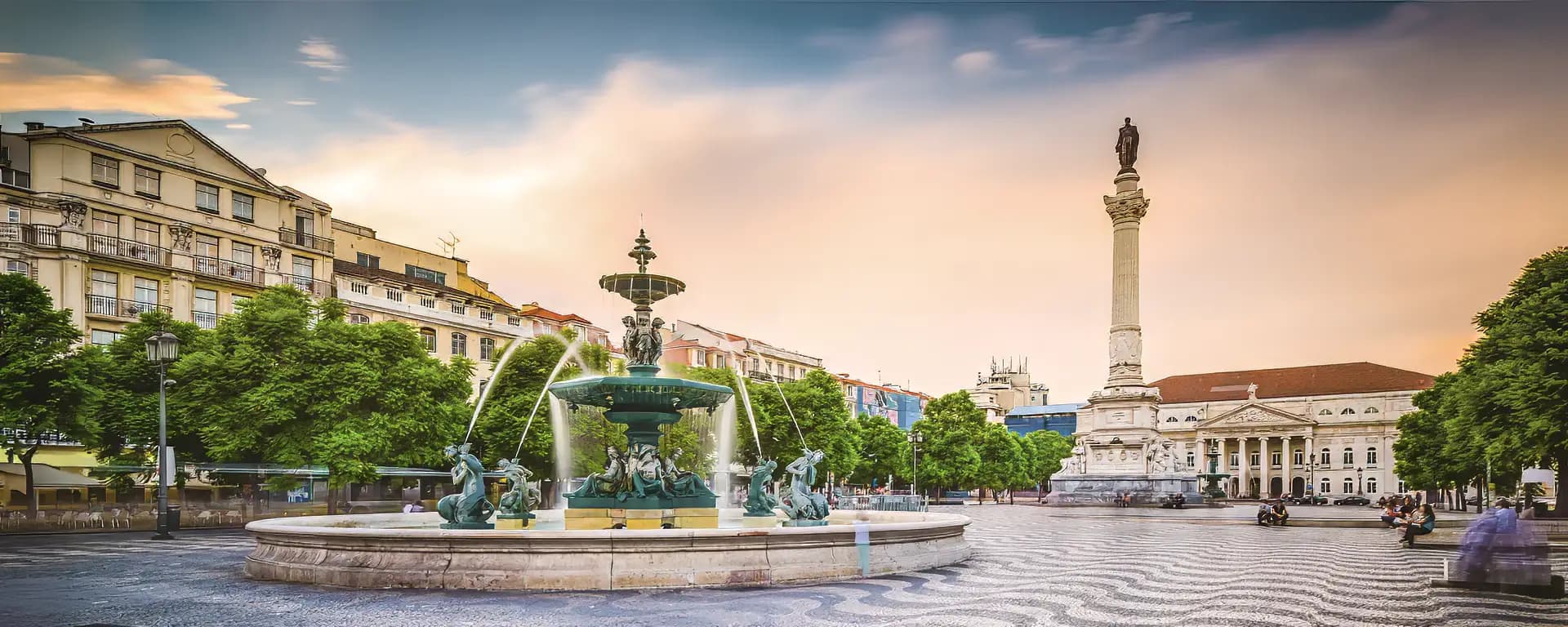
The neighbourhood is lively and bustling throughout the day, filled with shops, cafés, and restaurants. Baixa is home to some of Lisbon’s most emblematic streets and squares. The district begins at Praça dos Restauradores, extends along Avenida da Liberdade toward Praça do Marquês de Pombal, and continues south toward iconic landmarks such as Rossio Square and Praça do Comércio (also known as Terreiro do Paço), alongside a wide range of popular bars and eateries.
Things to Do in Baixa
Praça do Comércio
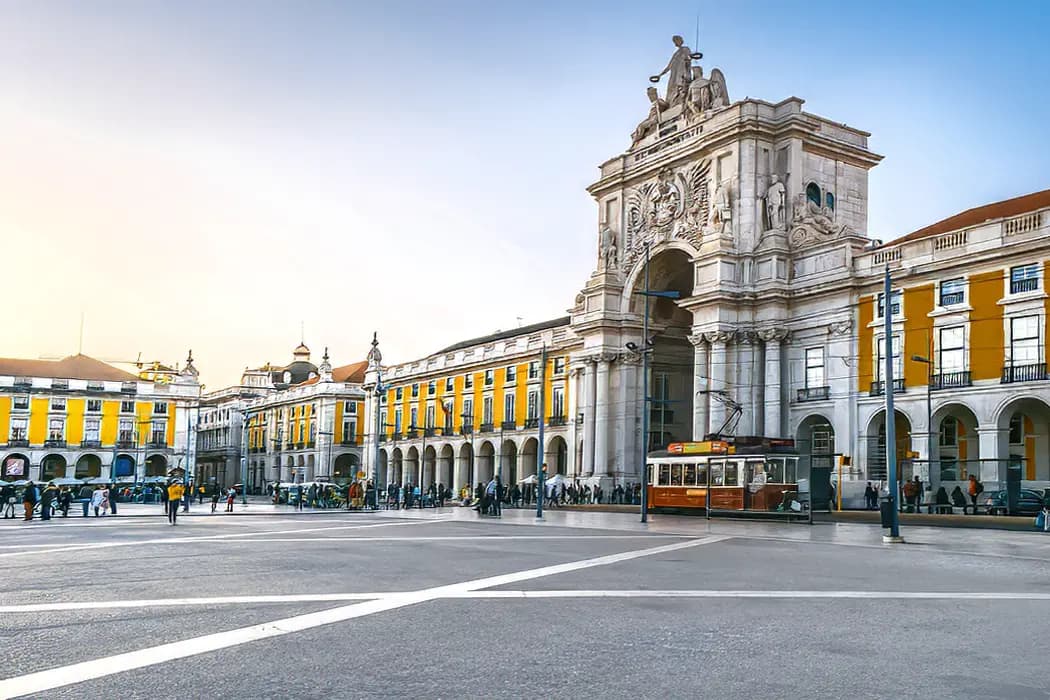
Often regarded as one of the most beautiful squares in Europe, Praça do Comércio opens southwards onto the vast Tagus estuary. Before the age of mass aviation, this square served as Lisbon’s grand ceremonial entrance for visitors arriving by sea.
It was here that kings and foreign heads of state traditionally disembarked when visiting Portugal. Known historically as Terreiro do Paço, the square once housed the Royal Palace on its western side, where the court was relocated from São Jorge Castle in the 16th century under King Manuel I.
Today, Praça do Comércio remains one of Lisbon’s most popular meeting points, valued for its prime location, excellent transport connections, and symbolic representation of Portugal’s former global power.
Santa Justa Lift
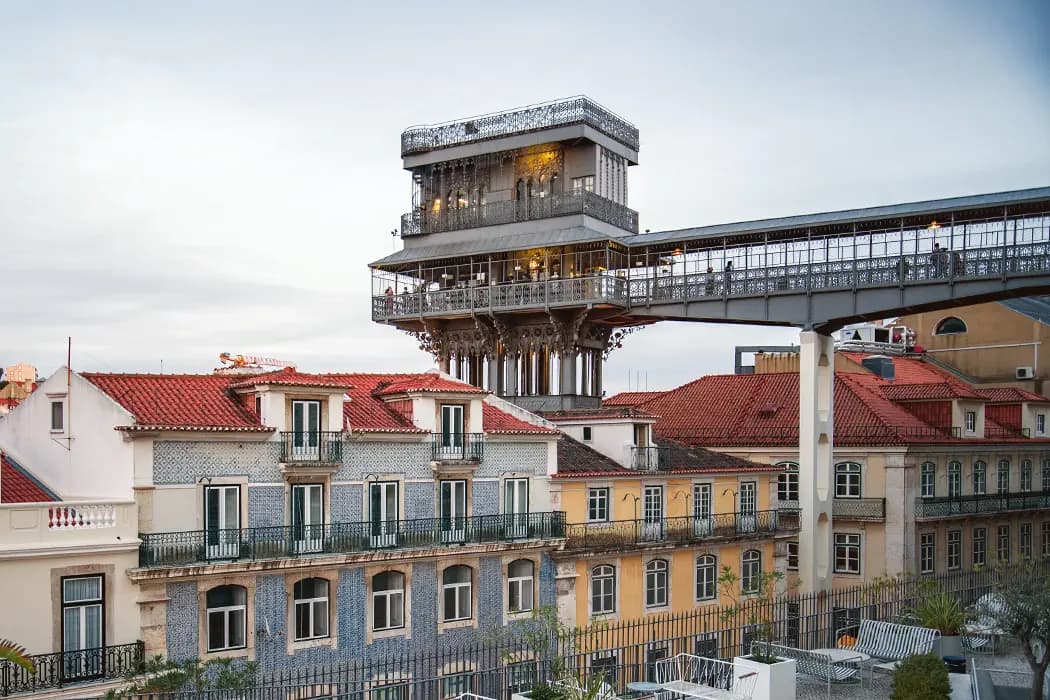
The Santa Justa Lift, originally known as the Carmo Lift, is one of Lisbon’s most distinctive landmarks and provides the fastest route between Baixa and Bairro Alto. It was inaugurated on 10 July 1902 and was initially powered by steam before being converted to electric operation in 1907.
Standing 45 metres tall, the iron structure reflects the influence of French engineering and is often compared to the work of Gustave Eiffel. This resemblance is intentional, as the lift was designed by Raoul Mesnier de Ponsard, a known admirer of Eiffel.
At the top, visitors are rewarded with a panoramic observation deck offering exceptional views over Baixa. Since its opening, the lift has become one of Lisbon’s most popular viewpoints.
Café Nicola
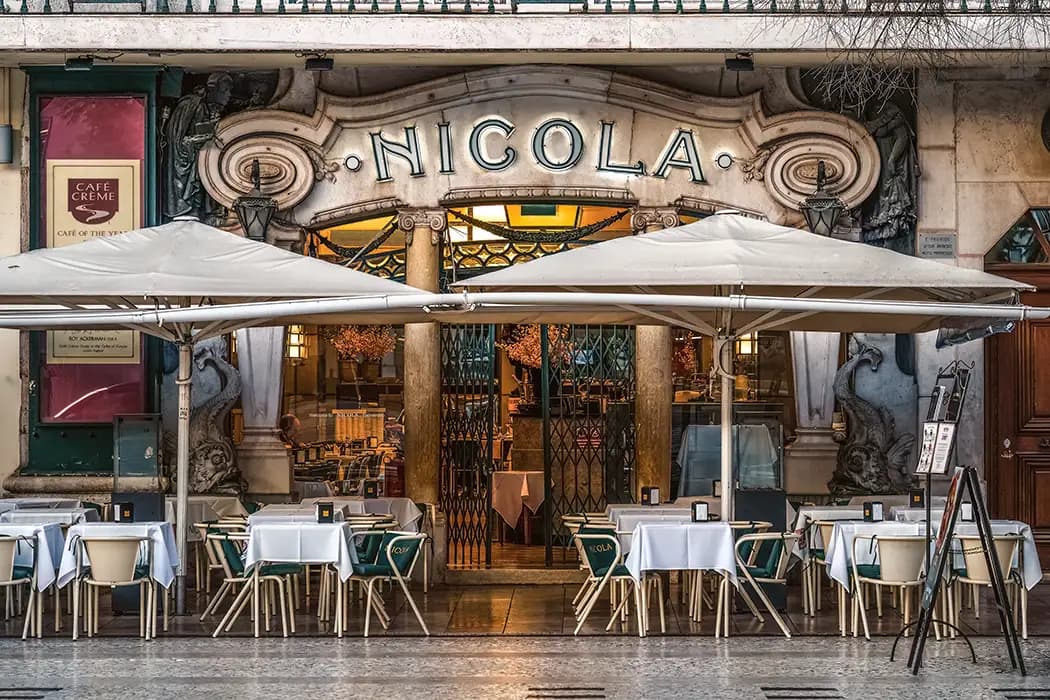
Overlooking Rossio Square, Café Nicola is one of Lisbon’s most historic and beloved cafés. Its origins date back to 1779, and it is famously associated with the poet Bocage, whose statue still stands nearby.
Throughout history, Café Nicola served as a meeting place for writers, artists, and politicians, earning it the nickname “The Academy.” During the 1930s and 1940s, as Lisbon became a refuge for displaced Europeans during wartime, the café also became a discreet backdrop for espionage and political intrigue.
Rua Augusta
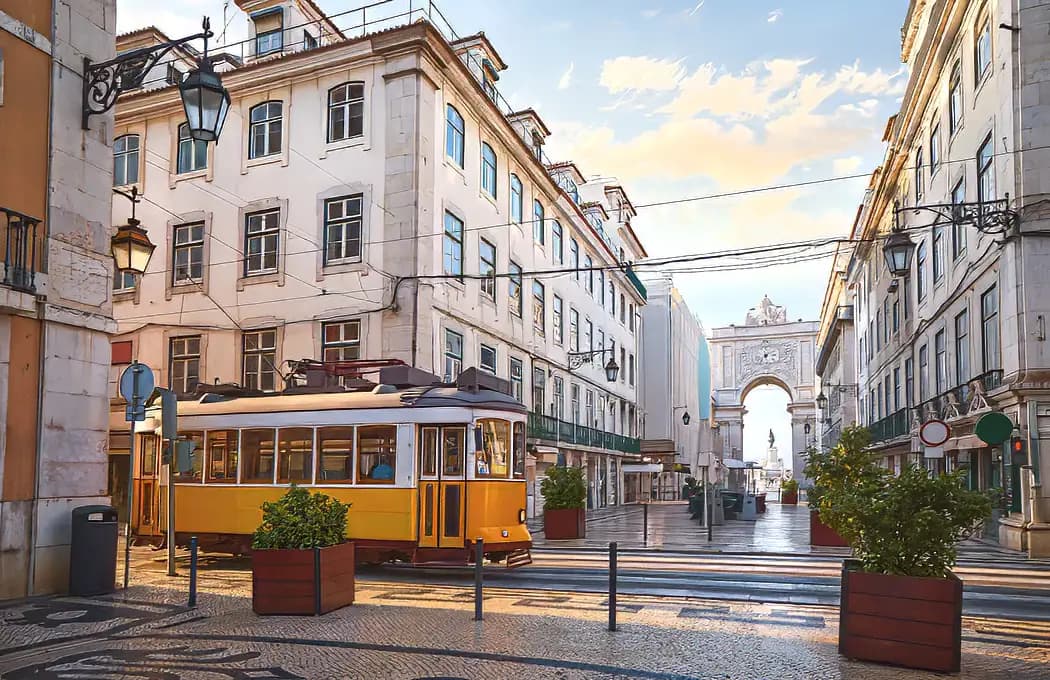
Linking Praça do Comércio and Rossio, Rua Augusta is Baixa’s main commercial artery. This pedestrian street is lined with a wide range of shops, cafés, and restaurants, catering to all tastes and budgets.
Rua Augusta blends tradition with contemporary culture and is frequently animated by street performers, artists, and vendors. Traditional flower sellers, roasted chestnut stalls, and café terraces add to its vibrant atmosphere.
As one of the main axes of the post-1755 reconstruction, most of Rua Augusta’s buildings remain well preserved. Visitors can access the terrace at the top of the Rua Augusta Arch via elevator for 360-degree views over downtown Lisbon. Beneath the Millennium BCP Bank, a small section of Roman baths can also be visited through scheduled guided tours.
Archaeological Nucleus of Rua dos Correeiros
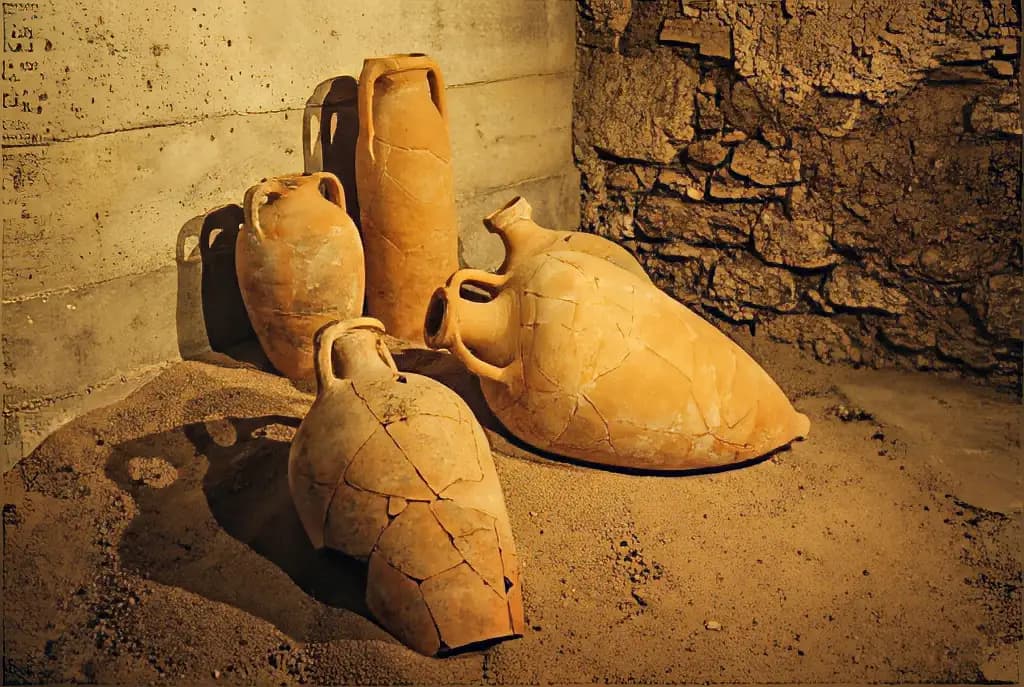
Located near the Rua Augusta Triumphal Arch, the Rua dos Correeiros Archaeological Nucleus occupies nearly an entire block of Lisbon’s Pombaline downtown. Managed by Millennium BCP, this unique site allows visitors to journey through approximately 2,500 years of Lisbon’s history.
The archaeological remains include Roman-era fish-processing facilities dating from the 1st century BC to the 4th century AD, a Paleo-Christian necropolis from the 5th century, and evidence of Islamic, medieval, pre-Pombaline, and Enlightenment-era occupation shaped by the urban vision of the Marquis of Pombal.
Rossio Train Station
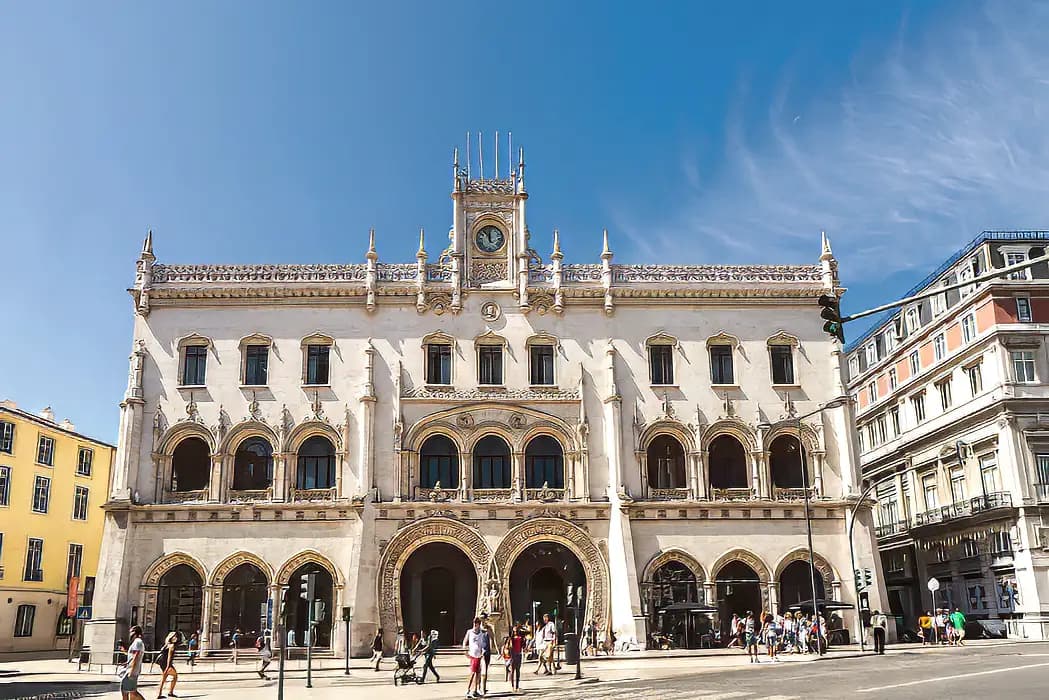
With its ornate Neo-Manueline façade and horseshoe-shaped arches, Rossio Train Station resembles a palace more than a transport hub. Built during a time when railway stations were seen as monuments to progress, it remains one of the most architecturally striking stations in Europe.
Though it has lost much of its original infrastructural importance, the station remains an iconic sight and serves as the departure point for trains to Sintra. Its decorative façade blends Romantic and Neo-Manueline elements and features a clock tower and twin arched entrances.
Carmo Convent
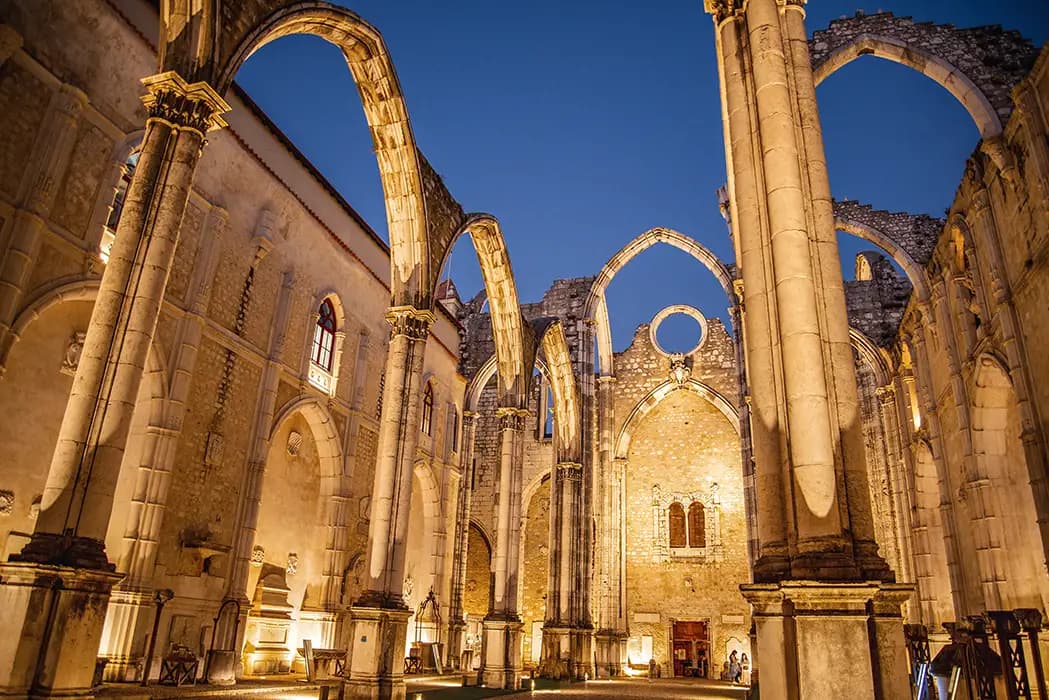
The ruins of the Carmo Convent stand as a powerful reminder of the destruction caused by the 1755 earthquake. Once Lisbon’s largest church, the roof collapsed during mass, leaving behind the haunting, open-air Gothic arches visible today.
The former altar now houses a small archaeological museum displaying an eclectic collection, including the tomb of King Ferdinand I, Roman artifacts, Visigothic relics, medieval tombstones, coins, ceramics, mosaics, and even South American mummies. At the museum entrance, a Gothic inscription notes that Pope Clement VII granted indulgences to faithful Christians visiting the church.
Roman Galleries of Rua da Prata
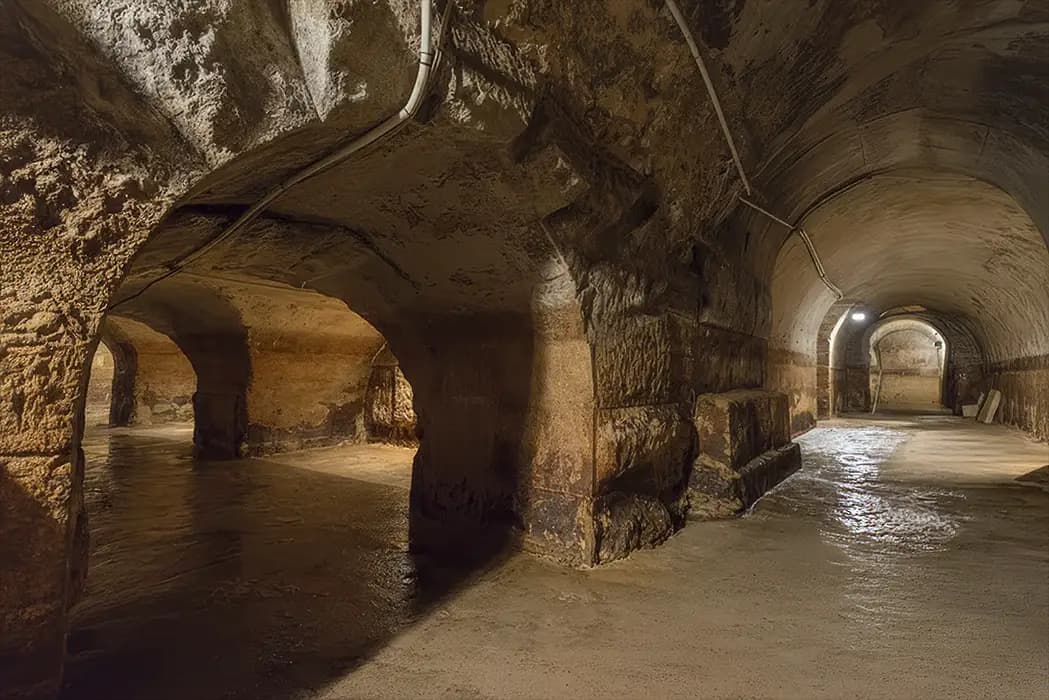
Beneath Rua da Conceição, visitors can explore ancient Roman tunnels dating back to the first half of the 1st century AD. Discovered during reconstruction works in 1771, the Roman Galleries of Rua da Prata are among Lisbon’s most extraordinary archaeological sites.
Due to preservation requirements, the galleries are only open once or twice a year during select weekends. Guided tours accommodate small groups every 20 minutes, offering a rare and memorable journey beneath the city’s streets.
Bertrand Chiado
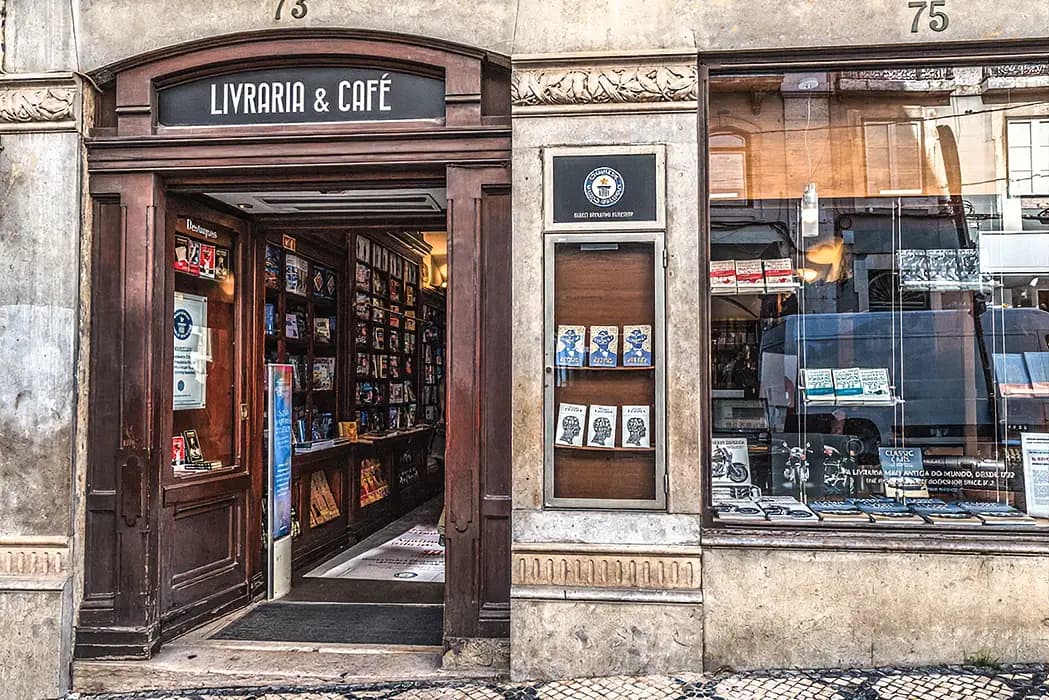
Recognised by Guinness World Records in 2011 as the oldest continuously operating bookstore in the world, Bertrand Chiado first opened in 1732. Located on Rua Garrett, the bookstore features multiple rooms and inviting reading spaces.
Over centuries, it has hosted major literary and political discussions and welcomed many of Portugal’s most influential thinkers. After being displaced by the 1755 earthquake, Bertrand eventually returned to Baixa once reconstruction was complete. Today, it remains a must-visit destination for anyone exploring Chiado and Baixa.
Local Information
Transportation
As Lisbon’s most central neighbourhood, Baixa offers outstanding transport connections. Buses, trams, taxis, and metro stations are readily available throughout the district.
The Santa Justa Lift also provides a practical and scenic route between Baixa and Bairro Alto, combining transport with panoramic city views.
Shopping
Baixa offers a diverse shopping experience, from traditional local stores to international brands. Rua Augusta is the district’s main shopping street, leading directly to Praça do Comércio and lined with cafés, clothing shops, and well-known retail chains.
Airports
Lisbon Portela Airport is the closest airport to Baixa and offers frequent domestic and international flights. Transportation between the airport and Baixa is efficient, with regular taxi, bus, metro, and tram services.
Travel time from the airport to Baixa typically takes 20 to 25 minutes, depending on the mode of transport.
Portugal Homes
Get the best property advice.